
Cultist Simulator
PlaydigiousCard
4.62.31K Reviews
- Version
- 3.9
- Installs
- 100.00K
- Age Rating
- Teen
Screenshots


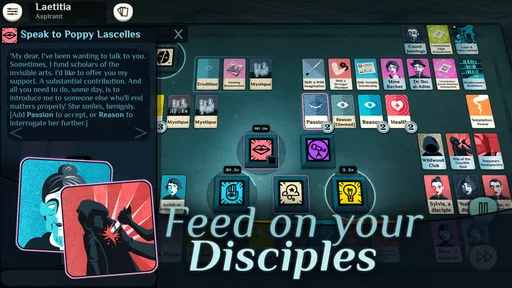
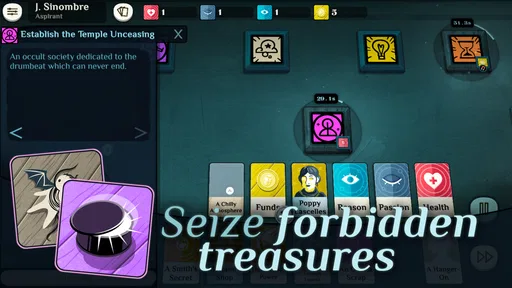
Our Review of Cultist Simulator
 Analysis by Appyee
I tend to enjoy card games most when their rules are clear and a good turn fits into a spare moment. Cultist Simulator takes a less familiar route: it asks me to learn by testing ideas, watching consequences unfold, and piecing together a story from the cards on the table. That makes it compelling, but not effortless. I’d recommend it to someone who likes mystery and patient experimentation, rather than anyone looking for a quick, guided card match.
Who will enjoy its unusual pace
This is a card game from Playdigious, but it doesn’t feel like the usual contest of building a hand and trying to beat an opponent. Its pleasure comes from managing a strange private world and working out what its pieces mean. If you enjoy narrative games that leave room for interpretation, the slow discovery can be the main attraction. If you want clear objectives, frequent instruction, or a run that explains every setback, the same design may feel stubborn.
A practical way to approach it is to treat early attempts as experiments, not as a campaign you must preserve at all costs. Try one action, note which cards change, and look at the result before committing to another idea. When a plan goes wrong, ask what resource or timing pressure you overlooked instead of repeating the same sequence. That small habit makes the game’s opacity feel more like a puzzle than a wall.
Readable at a glance, demanding in context
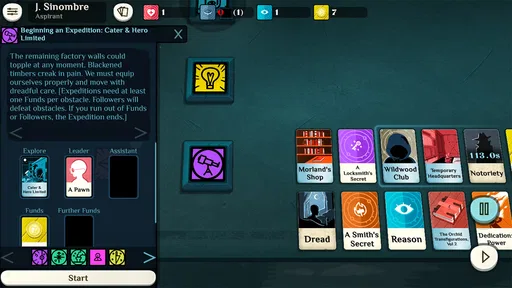
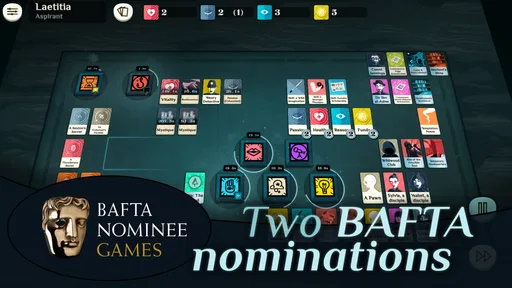
The table-like layout keeps cards and action spaces in view, which is useful when several things are happening at once. The artwork gives the world its identity, while the restrained presentation avoids distracting from the choices. Still, clean visuals do not mean every consequence is immediately obvious. A card may be easy to spot while its meaning, or the risk of using it in a particular way, takes time to understand.
I found it helpful to pause and read the text on cards rather than relying on their names or illustrations. A quick scan can miss the detail that explains why an action changed the situation. If you play on a smaller screen, keeping the number of simultaneous decisions modest can also make it easier to follow the board. This is a game that rewards attention more than rapid tapping, so there is little benefit in rushing through a turn.
Motor and sensory comfort
Because the central activity is arranging cards and choosing actions, the game does not depend on reflex-heavy combat or precise timing from the player. That can suit people who prefer a deliberate pace. The trade-off is that repeated card selection and close reading remain central; anyone who finds small interface elements tiring, or who has difficulty with touch-based selection, may want to try a short session before settling in.
The dark tone is part of the experience, not just decoration. Its unsettling subject matter and ominous writing may be exactly what a mystery fan wants, but they are not a comfortable fit for every mood. I would choose something lighter if I wanted a relaxing game with cheerful feedback. Here, even a quiet stretch can carry a sense of pressure because I am trying to understand what the world expects from me.
Playing around everyday interruptions
This works best when I can give it a little attention, even if I do not have a long uninterrupted evening. For example, I might open it during a quiet break, make one or two decisions, and stop to think about what the results suggest. That is more satisfying than launching it while distracted and tapping through cards without remembering why I chose them.
The game’s timers and overlapping demands also mean that a pause in my real day can interrupt my train of thought. Before putting the device away, I’d take a moment to check the board and remember which pressure I meant to address next. That simple reset makes it easier to return after a message or a short errand. It is less suited to a noisy commute if I cannot focus on card text or keep track of the state of play.
How it compares with familiar card games
Many mobile card games make their appeal obvious quickly: a match begins, the goal is stated, and the player learns through a sequence of guided turns. This one is more like a narrative strategy puzzle assembled from cards. It gives up some of that immediate clarity in exchange for a more personal feeling of discovery. I would choose a conventional deck-builder for brisk runs and explicit tactical choices; I would choose this when I want to investigate an unfamiliar system and accept that some attempts will teach me more than they reward me.
That difference is worth considering before paying. It costs $6.99, and the game also lists in-app purchases from $1.99 to $6.99 per item. I would not buy it expecting a free-to-start experience or a straightforward card battler. The central question is whether its slow, cryptic storytelling sounds enjoyable to you. Its 4.6 average from around 16,000 ratings and over 100,000 installs suggest that it has found an audience, but those figures cannot tell you whether its particular pace will suit your taste.
A Mysterious Journey Awaits
From the moment you start Cultist Simulator, you know you’re in for something different. The game doesn’t hold your hand. Instead, it throws you straight into the deep end, expecting you to swim—or sink. You start with a simple card representing your job, and from there, the game unfolds like a dark, mysterious novel where you’re the author of your own fate.
Gameplay Mechanics: A Balancing Act
The gameplay revolves around managing various cards and timers. Each card represents an aspect of your life—jobs, desires, health, and more. You place these cards into action slots to explore, study, and work your way through the game. But beware! Every decision can lead to unexpected consequences.
The challenge lies in how you balance your resources. Use your cards wisely, and you might just summon ancient gods or discover forbidden lore. Use them poorly, and you might end up insane, or worse. It’s a bit like juggling flaming swords while riding a unicycle—you get the idea.
Immersive Storytelling
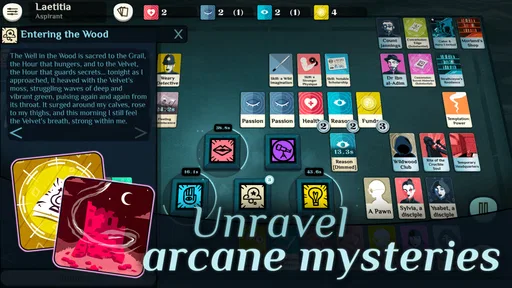
If you’re a fan of rich storytelling, you’ll love how Cultist Simulator weaves its narrative. The game’s world is dark and atmospheric, filled with secrets that you’ll uncover piece by piece. The writing is top-notch, with every card and action steeped in lore. It’s like reading a Lovecraftian novel where you’re the protagonist.
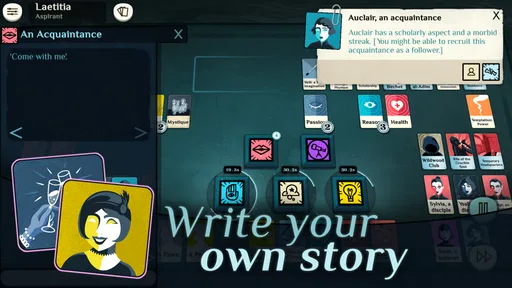
One of the coolest aspects is how the game allows you to craft your own story. Will you become a powerful cult leader or fall into madness? The choices you make shape your narrative, making each playthrough a unique experience.
Visually Striking
The visual design of the game is minimalistic yet striking. The cards are beautifully illustrated, and the interface is clean and intuitive. The game does a fantastic job of creating a mood that’s both eerie and intriguing. It might not be flashy, but it’s definitely effective in pulling you into its world.
Learning Curve: Patience Required
Now, let’s talk about the learning curve. This is where things get a bit tricky. Cultist Simulator doesn’t offer much in the way of tutorials. You’ll likely spend your first few hours fumbling around, trying to make sense of the mechanics. But that’s part of the charm. As you experiment and learn from your mistakes, the game becomes incredibly rewarding.
If you’re someone who enjoys figuring things out on your own, you’ll appreciate the challenge. For others, it might feel a bit daunting. But trust me, stick with it, and the payoff is worth it.
Access and audience
The game is rated Teen, and its eerie themes are worth keeping in mind when choosing whether it suits you or someone you share a device with. That rating does not make the tone universally comfortable: the writing leans into danger, uncertainty, and unsettling supernatural ideas. I would not hand it to a younger player simply because the board looks like a quiet card table; the subject matter is a substantial part of the experience.
For a phone or tablet, I’d also consider the setting rather than only the device. A calm room and a few minutes to read make the card text easier to absorb than a bright, noisy queue where attention keeps breaking. The game can be approached in short bursts, but I find those bursts most useful when I can remember the current pressures and return to the board with a clear head.
What to expect before starting
The current version is 3.9, and the minimum operating system listed for it is 5.1. If you are deciding whether an older device is suitable, checking its system version before installing is a sensible first step. The game is a paid download, so I would make that decision based on the style of play rather than expecting a tutorial to reveal everything in the opening minutes.
One question people often have is whether they need to understand the whole system before they can enjoy it. I don’t think so. Curiosity matters more than prior knowledge, and it is normal to make choices without being certain of the outcome. Another is whether it works for casual sessions: it can, provided you are comfortable returning to a board whose situation may have changed while you were away. If you need every session to end with a neat, clearly marked victory, this is probably not the best fit.
My most useful practical tip is to create a tiny mental checkpoint before leaving a session: identify the card or timer you most need to watch, then decide what you want to test next. That is more effective than trying to memorize every detail. I also avoid changing several parts of a plan at once when I am learning; if the result surprises me, testing one idea at a time makes it easier to understand which choice mattered.
Final Thoughts
To sum it up, Cultist Simulator is a unique blend of strategy, storytelling, and mystery. It’s a game that demands your attention and rewards your curiosity. If you’re up for a game that challenges you to think, explore, and immerse yourself in a dark, mysterious world, this might just be your next favorite.
So, grab your cards, take a deep breath, and dive into the unknown. Who knows what secrets you’ll uncover in the world of Cultist Simulator? Happy gaming!
My inclusive verdict
I see this as a strong choice for readers who enjoy dense card text, indirect storytelling, and learning through consequences, especially if they prefer thoughtful decisions over quick reactions. It is less suitable for anyone who needs explicit step-by-step instruction, finds repeated close reading uncomfortable, or wants a bright, low-pressure pastime. Those are not minor preferences here; they shape nearly every session.
Playdigious has a distinctive card game on its hands, but its appeal depends on how much uncertainty you are willing to accept. I would recommend it to a friend who likes to take notes mentally, test a theory, and let a strange story emerge from mistakes. If that sounds more exhausting than intriguing, a more guided card game will be a kinder pick. For me, the best reason to try it is not the promise of mastering every secret, but the satisfaction of slowly learning how this particular world responds.
Verdict
Strengths of Cultist Simulator
- Engaging storytelling and atmosphere.
- Unique blend of card game mechanics.
- Deep lore with endless exploration.
- Regular updates and expansions.
- Challenging puzzles and strategic depth.
Limitations of Cultist Simulator
- Steep learning curve for newcomers.
- No tutorial can be overwhelming.
- Limited visual aids or hints.
- Requires patience and time investment.
- Occasional bugs in UI navigation.
Other Releases by Playdigious
View All


Similar Picks in This Category
View All
Solitaire - Classic Card Games
MobilityWare4.6

UNO!™
Mattel163 Limited4.3

Spider Solitaire: Card Games
MobilityWare4.6

Solitaire.com - Classic Cards
Tripledot Studios Limited4.7

Plants vs. Zombies™ Heroes
ELECTRONIC ARTS4.1

Hearthstone
Blizzard Entertainment, Inc.4.1
Frequently Asked Questions
What is Cultist Simulator about?
Cultist Simulator is a narrative card game that immerses players into the mysterious world of the occult. You play as a seeker of unholy mysteries in a 1920s-themed setting. The game involves crafting a cult, summoning spirits, and deciphering ancient texts. It’s a mix of strategy and storytelling, rewarding players who enjoy exploration and experimentation.
Can I play Cultist Simulator offline?
Yes, Cultist Simulator can be played offline. Once downloaded, you don’t need an internet connection to enjoy the game. This is perfect for players who wish to immerse themselves in the game’s captivating world without interruptions or the need for a constant data connection.
What are the system requirements for Cultist Simulator on mobile?
Cultist Simulator requires a device running Android 5.1 or later, or iOS 11.0 or later. It’s compatible with both smartphones and tablets. The game is designed to run smoothly on mid-range devices, but for the best experience, a device with a decent processor and memory is recommended.
Is Cultist Simulator suitable for all ages?
Cultist Simulator is recommended for mature audiences due to its themes involving the occult, ritualistic practices, and some dark storylines. It’s rated for ages 12 and up, but parents should review the content to determine its suitability for younger players based on their maturity levels.
Does Cultist Simulator offer in-app purchases?
Yes, Cultist Simulator includes in-app purchases. While the base game offers a complete experience, additional content packs and expansions are available for purchase. These add new storylines, mechanics, and mysteries to explore, enhancing the depth and replayability of the game.
Play our best games!


